flowers
Roses Beyond Valentine's Day
When roses are the right call and when they are lazy, what colours and stem counts signal, and why February is the worst month to buy them.
Straight to the gifts: Shop flowers Valentine's gifts Anniversary gifts Sympathy gifts
The default flower, for better and worse
Roses are what people send when they want a flower everyone recognises as serious. That recognition is their power and their trap. Sent at the right moment, a bunch of roses lands with more weight than any other flower for the money. Sent on autopilot, they read as the gift of someone who typed “flowers” and clicked the first thing, and the recipient can tell the difference.
The test is simple: are you sending roses because they mean something here, or because they were the obvious option? Roses carry meaning well. What they do not do is disguise the absence of one.
When roses are exactly right
Roses earn their reputation in the moments built for them. An anniversary, where red roses restate something long-running and the cliché is the point. A proposal or a declaration, where you want zero ambiguity. A serious apology between partners, where the weight of the flower matches the weight of the words. A milestone worth formal respect: a graduation, a big promotion, a parent’s landmark birthday, where roses in the right colour read as honour rather than romance.
And they are right whenever the recipient simply loves roses. Personal taste beats symbolism every time it is known.
When they are lazy
Roses are the wrong answer when their job is to spare you a decision. A birthday for someone whose taste you know calls for their flower, not the default one. A cheerful everyday gesture is often better served by something sunnier and less loaded: gerberas, a bright mixed bunch, proteas for someone who likes the local look. And in any situation where romance would be a misreading, roses force the recipient to do the work of un-reading them.
There is also a plainer problem: because roses are the default, they carry the least information. “He sent roses” tells the story of a man who sent flowers. “He sent the king proteas she had at her wedding” tells the story of a man who was paying attention.
The colours South Africans actually read
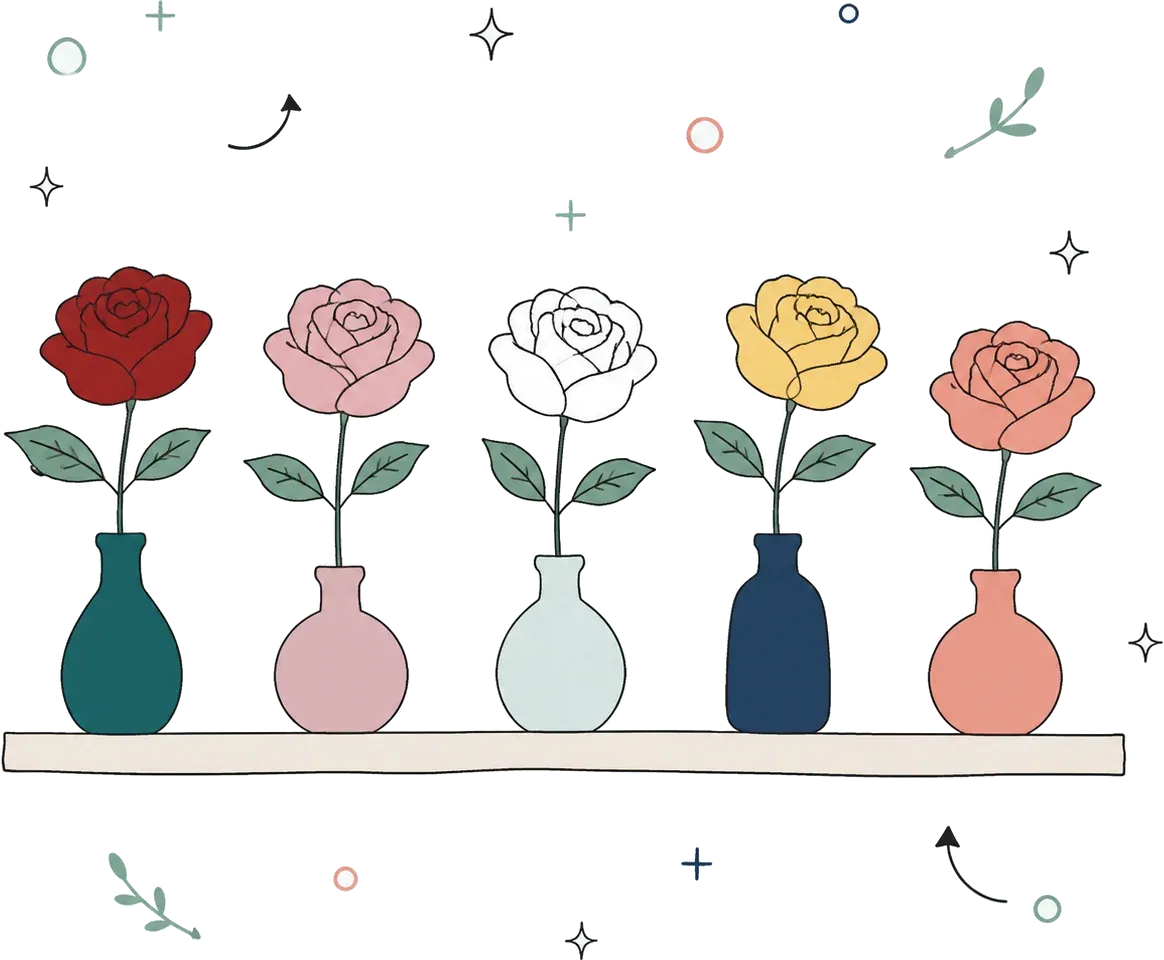
Only a few rose colours carry a signal most recipients will receive, and they are worth knowing cold.
Red is romantic love, without exception. There is no volume of red roses small enough to send platonically.
Pink is affection without romance: warm, safe, right for mothers, daughters, friends and colleagues you are fond of. Deeper pink reads more festive, paler pink more tender.
White is formal: weddings, sympathy, solemn respect. White roses are the rose to send to a funeral or to a grieving home, where red would be wrong and bright colours flippant.
Yellow is friendship and cheerfulness, the most sociable rose and the safest for an office.
Orange and cream sit between the strong signals, read mostly as taste rather than message, and suit people who would find the classic colours predictable.
Stem count: what the number says
Nobody counts stems consciously, but the size of a bunch is a signal everyone receives. A single rose is a gesture: small, deliberate, sometimes more romantic than a bouquet because it stakes everything on one stem. A modest bunch reads warm and personal. The classic dozen is the full formal statement of romance, so established that it cannot be sent casually. Anything beyond a dozen is theatre: an anniversary spectacle, a grand apology, a public declaration.
Match the count to the size of the statement you actually want to make. An enormous arrangement for a small occasion overshoots as surely as a thin one undershoots.
The dozen-red-roses-to-a-colleague mistake
It deserves its own section because it keeps happening. Someone wants to thank a colleague properly, reaches for the most serious flower they know, and sends a dozen red roses to reception. Now a professional thank-you has become a public romantic statement: delivered in front of the office, discussed at lunch, and awkward for the recipient no matter how gracefully they take it.
At work, the rules are short. Never red. Never a dozen. Yellow, pink, orange or a mixed bunch, in a modest size, with a card that names the professional reason: “thank you for carrying the audit”. If any part of you hesitates, send something that is not roses at all.
Roses by occasion, quickly
For an anniversary: red, and tradition rewards scale, so this is the one occasion where a big bunch never overshoots. For an apology between partners: red or deep pink, with the real work done by the note, because roses ask for forgiveness but only words explain what for. For congratulations: yellow, orange or bright pink, festive and unambiguous. For sympathy: white, understated, no theatrics; here restraint is the message.
The February squeeze
One seasonal pattern is worth planning around. Valentine’s Day concentrates the world’s rose demand into a single week, and the general result, in South Africa as everywhere, is that roses around mid-February cost more, sell out earlier and are cut and shipped under more pressure than at any other time of year. The exact numbers vary by year and by shop, but the direction never does.
If Valentine’s roses are the mission, order well ahead and expect February to be the expensive week. If the occasion is yours to choose, an anniversary bunch in April or a just-because bunch in September buys better roses with less strain. Roses are a twelve-month flower that most people only remember in the one month it is hardest to buy them well. Sending them in the other eleven is the easiest way to make the default flower feel like a thought again.
Ready to turn the thought into a gift?