etiquette
How to Give a Gift That Does Not Land Badly
The common ways gifts go wrong, from gifting up at work to jokes that do not read as jokes, and how to recover when one has misfired.
Straight to the gifts: Shop personalised gifts Shop wine and spirits Thank you gifts Farewell gifts
Bad gifts are rarely cheap gifts
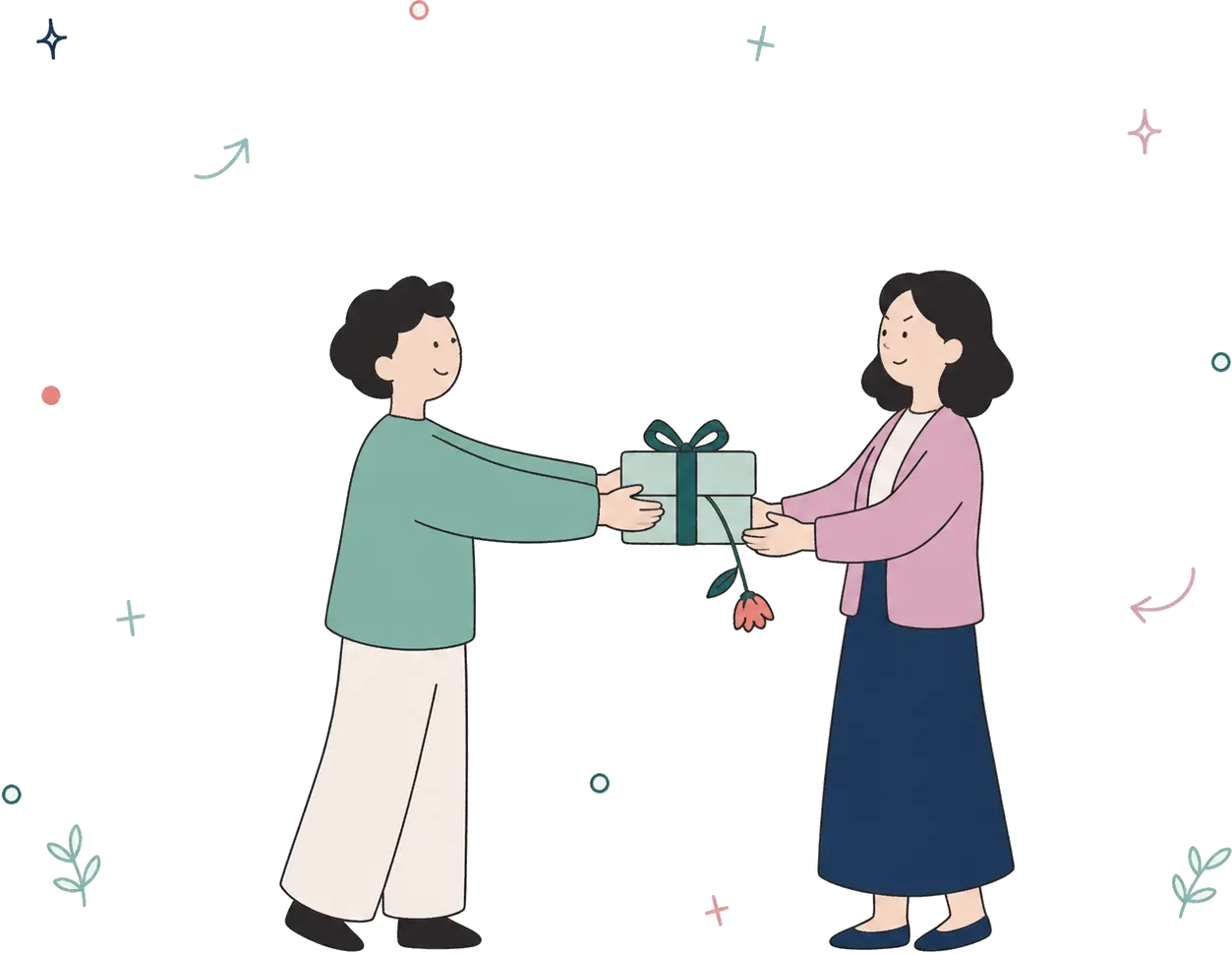
Almost every gift that lands badly fails on meaning, not on money. A gift is a message about how you see the other person, and the expensive version of the wrong message is worse than the cheap version of the right one. The failures below are the common ways the message goes wrong, and every one of them can be caught in the shop, before any wrapping happens.
Gifting up the hierarchy
A personal gift from you alone to your manager reads as currying favour, whatever you meant by it, and it reads that way to the manager too, who now owes you an undefined something. It also puts quiet pressure on the colleagues who did not gift. The clean form is the group gift: everyone in for a small equal amount, one card, no individual attribution. If you genuinely want to thank a boss for something specific, words do it better than objects. Say it, or write it, and copy nobody.
Gifts that create an obligation
Spending far above what the relationship supports does not feel generous from the other side. It feels like debt. The recipient now owes a matching gift they may not afford, or an explanation they do not want to give, and the imbalance sits quietly in the relationship. The fix is to spend inside the band the relationship expects and to put any surplus into effort rather than price. And if you are the one who has received such a gift, you are not obliged to match it. Thank them warmly and reciprocate at your own level.
Gifts that comment on the body or the habits
Anything that touches weight, age, skin, fitness, drinking or smoking will be read as commentary, because it is commentary, however lovingly meant. The recipient does not unwrap your intention. They unwrap the object, in front of other people. Even a stated ambition is dangerous ground: supporting the diet someone mentioned once is not the same as their wanting it gift-wrapped in front of the family. If the person has asked loudly and repeatedly for exactly that thing, fine. Otherwise support the ambition invisibly, or not at all.
Joke gifts
A joke gift is a performance with one shot and no second take. For it to work it needs three things: a genuinely shared joke, not a generic one off a novelty shelf; an audience that is in on it; and a real gift alongside, so the laugh is not the whole of it. If any one of the three is missing, skip the joke. A novelty item that is only a novelty leaves nothing behind once the laugh is over, and the laugh is not guaranteed.
Re-gifting
Re-gifting has a bad name because it is usually done badly. The risks are specific: the original giver finds out; the item carries traces, a gift receipt at the bottom of the bag, an inscription, packaging from a shop in another city; it goes back into the same social circle it came from; or it fits the new recipient as badly as it fit you. If you re-gift at all: only new and unopened things, only outside the circle the gift came from, only after checking every layer for traces, and never anything handmade or chosen with visible care, because passing those on is the part people cannot forgive. When in doubt, donate it and buy properly.
Gifting into a household you do not know
Alcohol into a home that may not drink. Biltong for the vegetarian. Food into a kitchen that keeps kosher or halaal, scented things for the sensitive, sized things with no size to go on. The failure in all of these is guessing. Flowers are close to universally safe, and most consumables become safe after one question about preferences and allergies. The stronger move is the single question to a mutual contact: “Anything I should avoid for their house?” It costs one message and beats every assumption you could make.
How to recover when a gift has landed badly
You will usually know: the pause, the too-bright thank-you, the gift left behind on the table. Recovery is mostly restraint.
- Do not perform the mistake. Apologising repeatedly, or explaining the thinking at length, makes the moment bigger than it was.
- Offer the exit once: “If it is not right, swap it, truly no offence taken.” Then drop it forever. Gift receipts, included by default with anything sized or tasted, are what make that exit real.
- If the gift genuinely offended, one short apology without a defence: “I got that wrong and I am sorry.”
- Then repair with time, not escalation. The correction is the next considered gesture at normal scale. An immediate bigger gift reads as panic and restarts the whole cycle.
One badly landed gift, handled with grace, costs nothing lasting. Handled with drama, it becomes the story. Choose grace.
Ready to turn the thought into a gift?